> For the complete documentation index, see [llms.txt](https://docs.mydbsync.com/cloud-workflow/llms.txt). Markdown versions of documentation pages are available by appending `.md` to page URLs; this page is available as [Markdown](https://docs.mydbsync.com/cloud-workflow/template-library/quickbooks-online-to-business-central-integration.md).

# QuickBooks Online to Business Central Integration

## Introduction

DBSync’s **QuickBooks Online to Business Central Integration** provides a robust and easy-to-use solution for synchronizing financial and operational data between **QuickBooks Online** and **Microsoft Dynamics 365 Business Central**.

This integration supports the following object mappings:

* **QuickBooks Online**: Customers, Items, Estimates, Sales Receipts, Invoices, and Payments
* **Business Central**: Customers, Items, Sales Quotes, Sales Orders, Sales Invoices, and Cash Receipt Journals

In addition to the real-time synchronization, DBSync also supports the **migration of historical Accounts Receivable data** from QuickBooks Online to Business Central, making it useful for data consolidation and ERP transition scenarios.

The integration comes equipped with a **pre-built field-to-field mappings**. It also provides the flexibility to accommodate **complex or dynamic mapping requirements**, based on the business logic.

DBSync's **automatic update mechanism** ensures that customers receive the latest features and enhancements with every new product release, without requiring manual intervention.

### Data Flow

An example of the data flow for the integration between QuickBooks Online & Business Central is shown in the table below.

<table><thead><tr><th valign="top">QuickBooks Online</th><th align="center">Sync Direction</th><th valign="top">Business Central</th></tr></thead><tbody><tr><td valign="top">Customer</td><td align="center">---></td><td valign="top">Customers</td></tr><tr><td valign="top">Items</td><td align="center">---></td><td valign="top">Items</td></tr><tr><td valign="top">Invoice &#x26; Invoice Line Items</td><td align="center">---></td><td valign="top">Sales Quote/Order/Invoice &#x26; Sales Invoice Line items</td></tr><tr><td valign="top">Sales receipts &#x26; Line Items</td><td align="center">---></td><td valign="top">Sales Quotes/Order &#x26; Sales Quote/Order Line items</td></tr><tr><td valign="top">Estimate &#x26; Line Items</td><td align="center">---></td><td valign="top">Sales Quotes/Orders &#x26; Sales Quotes/Orders Line item</td></tr><tr><td valign="top">Credit Memo &#x26; Line Items</td><td align="center">---></td><td valign="top"><p>Sales Credit Memo &#x26; Sales Credit</p><p>Memo Line Items</p></td></tr><tr><td valign="top">Receive Payments</td><td align="center">---></td><td valign="top">Cash Receipt Journal</td></tr></tbody></table>

## Creating Web Services in Business Central for DBSync Integration <a href="#emcuie4i030s" id="emcuie4i030s"></a>

This provides step-by-step instructions on how to create web services in Microsoft Dynamics 365 Business Central for various sales-related transactions. The web services will be prefixed with DBSync for integration with DBSync.

### Prerequisites <a href="#id-1fu1gc8ht8r2" id="id-1fu1gc8ht8r2"></a>

* Microsoft Dynamics 365 Business Central access with administrative rights.
* Web services management permissions.
* Basic understanding of Business Central objects and OData services.

### Steps to Create Web Services <a href="#id-325opra6azqm" id="id-325opra6azqm"></a>

#### Accessing Web Services Page <a href="#gdenmpqi9a46" id="gdenmpqi9a46"></a>

1. Open Business Central.
2. Navigate to Web Services by searching for **Web Services** in the search bar.
3. Click on New to create a new web service.

#### Creating Web Services <a href="#ouif5cqpmvwu" id="ouif5cqpmvwu"></a>

For each document type, follow these steps:

**A. Sales Quotes (DBSyncSalesQuote)**

1. **Object Type:** Page
2. **Object ID:** 41 (Sales Quote Page)
3. **Service Name:** DBSyncSalesQuote
4. **Published:** Yes
5. Click OK to save.

**B. Sales Orders (DBSyncSalesOrder)**

1. **Object Type:** Page
2. **Object ID:** 42 (Sales Order Page)
3. **Service Name:** DBSyncSalesOrder
4. **Published:** Yes
5. Click OK to save.

**C. Sales Invoices (DBSyncSalesInvoice)**

1. **Object Type:** Page
2. **Object ID:** 43 (Sales Invoice Page)
3. **Service Name:** DBSyncSalesInvoice
4. **Published:** Yes
5. Click OK to save.

**D. Sales Credit Memos (DBSyncSalesCreditMemo)**

1. **Object Type:** Page
2. **Object ID:** 44 (Sales Credit Memo Page)
3. **Service Name:** DBSyncSalesCreditMemo
4. **Published:** Yes
5. Click OK to save.

**E. Cash Receipt Journal (DBSyncCashReceiptJournal)**

1. **Object Type:** Page
2. **Object ID:** 255 (Cash Receipt Journal Page)
3. **Service Name:** DBSyncCashReceiptJournal
4. **Published:** Yes
5. Click OK to save.

## Process to run the Integration

To utilize the pre-built **QuickBooks to Business Central Integration** template, follow the below steps:

1. Login to DBSync Cloud Workflow and from the home screen click **Add Template**.
2. Select the template: **QuickBooks Online to Business Central Integration** template which allows for running multiple **unidirectional** workflows and integration between the two applications - **QuickBooks Online** and **Business Central**.
3. The template will be added to your **Projects**.
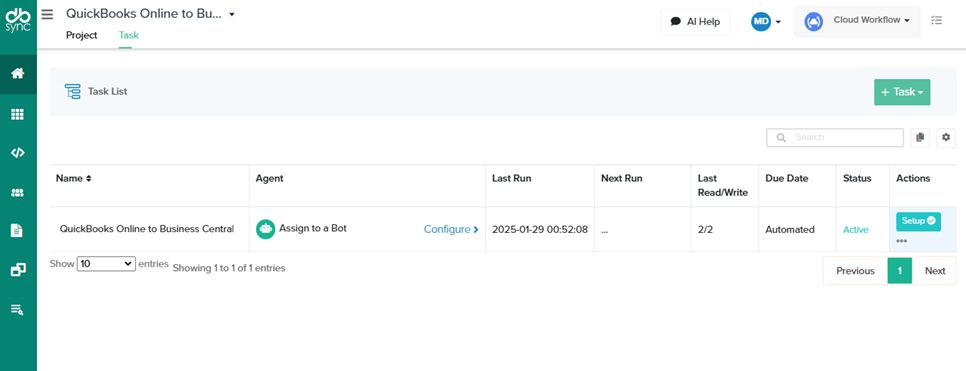
4. Select the template and you will be redirected to the **Task** screen.
5. Click **Setup** to access the setup wizard of the pre-built template form as shown below.

<figure><img src="/files/luHHQpKpMS5KbYnrmbSz" alt=""><figcaption></figcaption></figure>

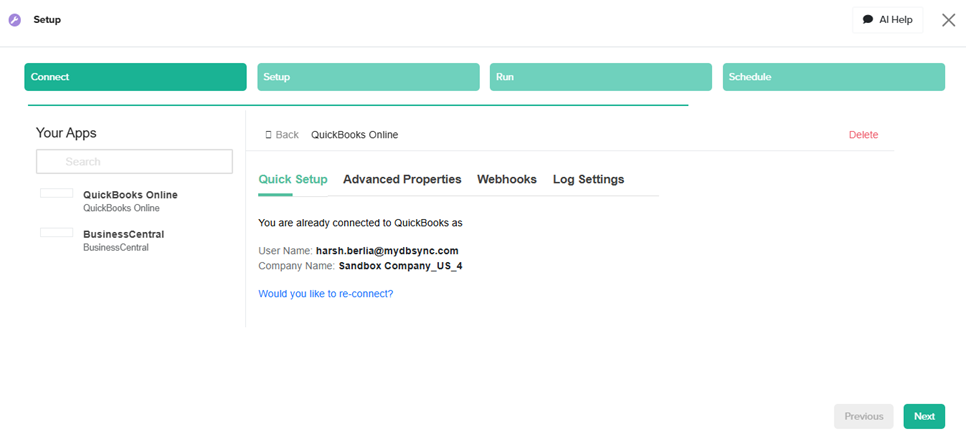
6. In the Connect tab, verify that your applications are connected - Business Central and QuickBooks Online.

{% hint style="info" %}
For more information about connecting the Business central application, click [here](/cloud-workflow/connectors/microsoft-dynamics-365-business-central.md).

For more informaiton about connecting the QuickBooks Online application, click [here](/cloud-workflow/connectors/quickbooks-online.md).&#x20;
{% endhint %}

<figure><img src="/files/oHPMUulAcjPcki0atipo" alt=""><figcaption></figcaption></figure>

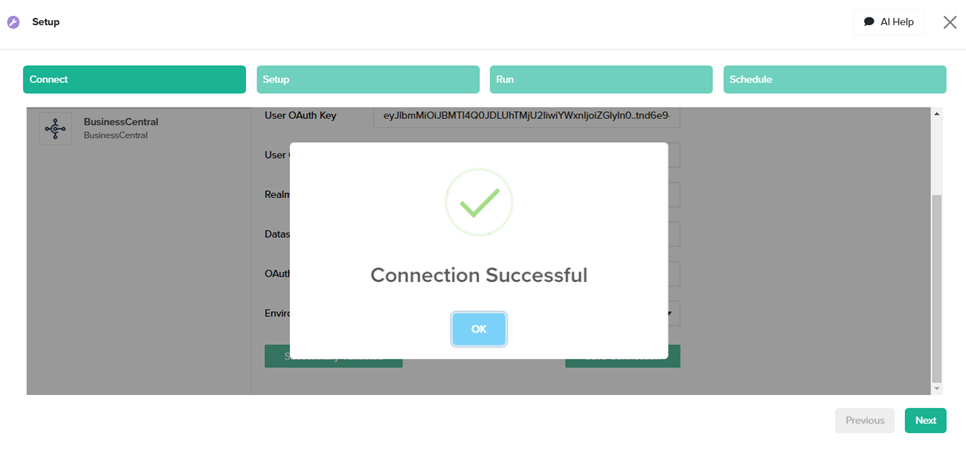
7. Click on **Advanced Properties** an click **Test Connection** and you will get a pop-up confirming the same. Ensure you verify the connection for Business Central.

<figure><img src="/files/2u2VjhKlmK67o1Chgyr2" alt=""><figcaption></figcaption></figure>

8. Click **Next** and you will be redirected to the **Setup** tab.

The Setup screen displays a form like questionnaire which you can choose to answer based on the workflow you want to run. There are 4 types of integration or sync you can perform with this template as listed below.

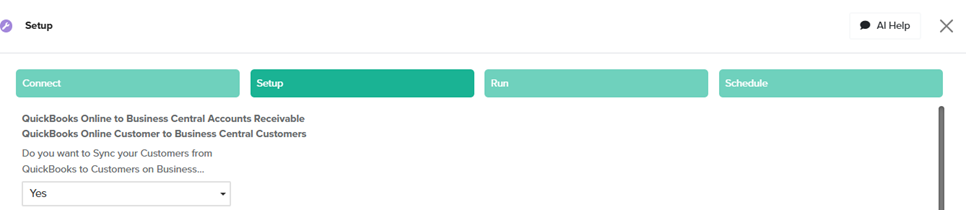
#### A. QuickBooks Online Customer to Business Central Customers

Use this form to update all customer records from QuickBooks Online and push them into Business Central as Accounts. The form is pre-populated with answers for the tabs and you can modify them based on need. The form has the following fields already pre-populated with mapping:

**Do you want to sync your Customers from QuickBooks Online to Customers on Business Central?**

* Click **Yes** or **No** in order to update Customers from QuickBooks Online to Business Central as a customer.

<figure><img src="/files/Zxm5aJ5AwUK8lEtQQTC0" alt=""><figcaption></figcaption></figure>

#### B. Integrate New Items to Business Central

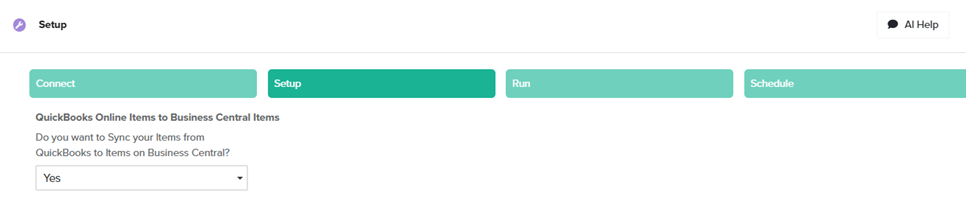
Use this form to update all item information as items in Business Central. The form is pre-populated with answers for the tabs and you can modify them based on your need. The form has the following fields already pre-populated with mapping:

**Do you want to Sync your Items from QuickBooks to Items on Business Central?**

* Choose **Yes** or **No** from the drop-down to add products from QuickBooks Online into Business Central as products/items.

<figure><img src="/files/TtD0rANpa9wvuzc1i7vp" alt=""><figcaption></figcaption></figure>

#### C. Integrate New Estimates to Business Central

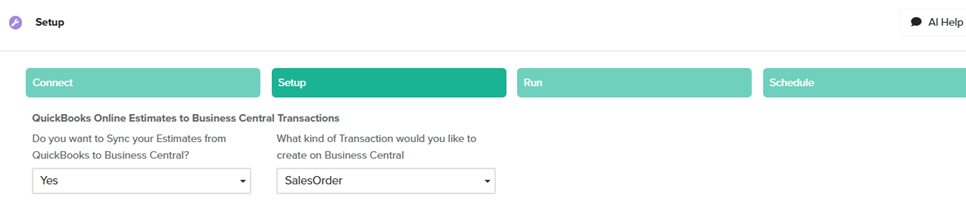
&#x20;Use this form to 'Generate' Estimates transactions from QuickBooks Online to Business Central . You can create Sales Quotes or Sales Orders and directly update from QuickBooks Online to Business Central.

The form is pre-populated with answers for the tabs and you can modify them based on need. The form has the following fields already pre-populated with mapping:

**Do you want to Sync your Estimates from QuickBooks to Business Central?**

* Click **Yes** or **No** in order to update Estimates from QuickBooks Online to Business Central.

**What kind of Transaction would you like to create on Business Central?**

* Define the object from Business Central to retrieve/map the information in order to create a transaction. For example, Sales Order or Sales Quotes.

<figure><img src="/files/1D8ib9MRtt4ywqqgXOVE" alt=""><figcaption></figcaption></figure>

#### D. Integrate New Sales Receipt to Business Central

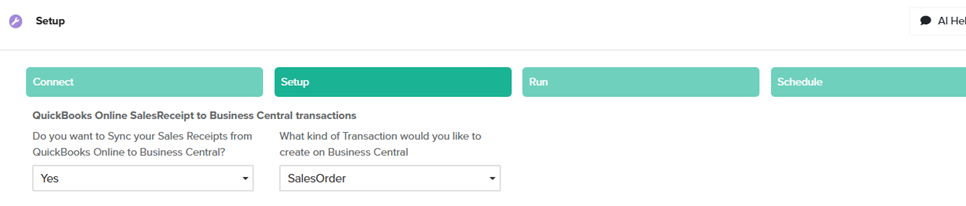
Use this form to 'Generate' Sales Receipt transactions from QuickBooks Online to Business Central . You can create Sales Quotes or Sales Orders and directly update from QuickBooks Online to Business Central.

The form is pre-populated with answers for the tabs and you can modify them based on need. The form has the following fields already pre-populated with mapping:

**Do you want to Sync your Sales Receipt from QuickBooks to Business Central?**

* Click **Yes** or **No** in order to update Sales Receipt from QuickBooks Online to Business Central.

**What kind of Transaction would you like to create on Business Central?**

* Define the object from Business Central to retrieve/map the information in order to create a transaction. For example, sales Order or Sales Quotes.

<figure><img src="/files/OwmDdJKhmf19rwu6rCWw" alt=""><figcaption></figcaption></figure>

#### E. Integrate New Invoices to Business Central

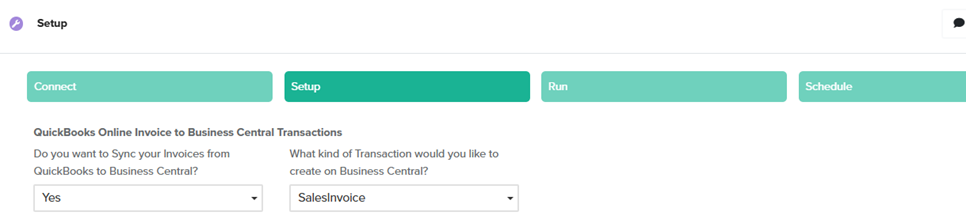
&#x20;Use this form to 'Generate' Invoices transactions from QuickBooks Online to Business Central . You can create Sales Invoices, Sales Quotes or Sales Orders and directly update from QuickBooks Online to Business Central.

The form is pre-populated with answers for the tabs and you can modify them based on need. The form has the following fields already pre-populated with mapping:\
\
**Do you want to Sync your Invoices from QuickBooks to Business Central?**

* Click **Yes** or **No** in order to update Invoices from QuickBooks Online to Business Central.

**What kind of Transaction would you like to create on Business Central?**

* Define the object from Business Central to retrieve/map the information in order to create a transaction. For example, Sales Order or Sales Quotes or Sales Invoices.

<figure><img src="/files/CfFZUvU6uSNkp8PHjSKD" alt=""><figcaption></figcaption></figure>

#### F. Integrate New Credit Memos to Business Central

&#x20;Use this form to 'Generate' Credit Memos transactions from QuickBooks Online to Business Central . You can create Sales Credit Memos and directly update from QuickBooks Online to Business Central.

The form is pre-populated with answers for the tabs and you can modify them based on need. The form has the following fields already pre-populated with mapping:

**Do you want to Sync your Credit Memos from QuickBooks to Business Central?**

* Click **Yes** or **No** in order to update Credit Memos from QuickBooks Online to Business Central.

<figure><img src="/files/qOOLZ2BMRqcVfmsYHpGo" alt=""><figcaption></figcaption></figure>

#### G. QuickBooks Online to Business Central Payment Integration

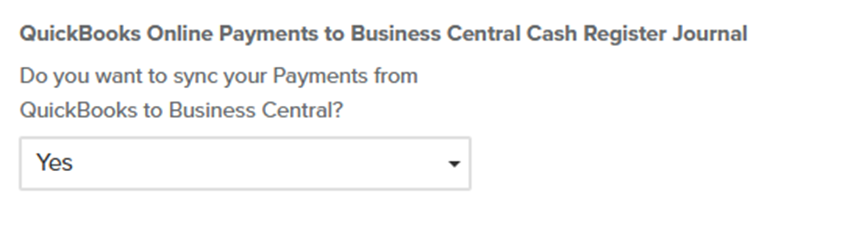
Use this form if you want to sync the Receive Payments from QuickBooks Online to Business Central.

**Do you want to create Transaction Receivable in Business Central?**

* Choose **Yes** or **No** to enable the sync which will update the Cash Receipt Journal information for a customer invoice in Business Central.

<figure><img src="/files/gRXRNPcqxtGIDU5fGS4w" alt=""><figcaption></figcaption></figure>

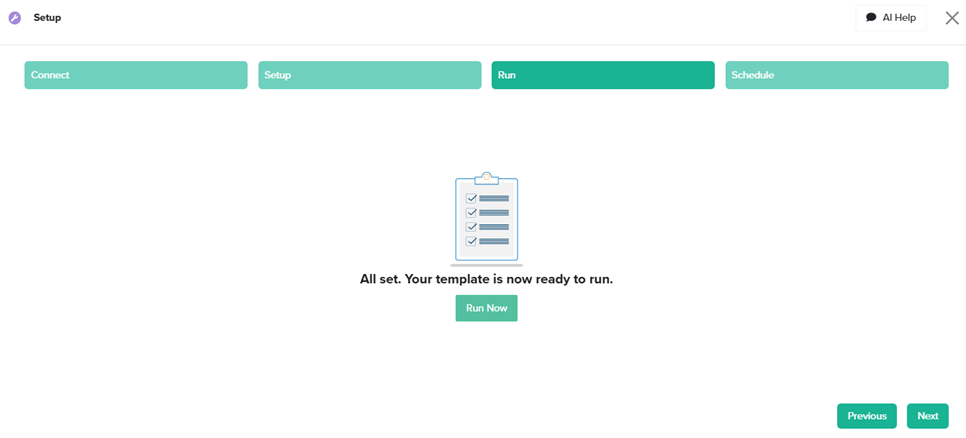
9. Click **Next**.

<figure><img src="/files/wWf8lEAvZ3S4OWffP1og" alt=""><figcaption></figcaption></figure>

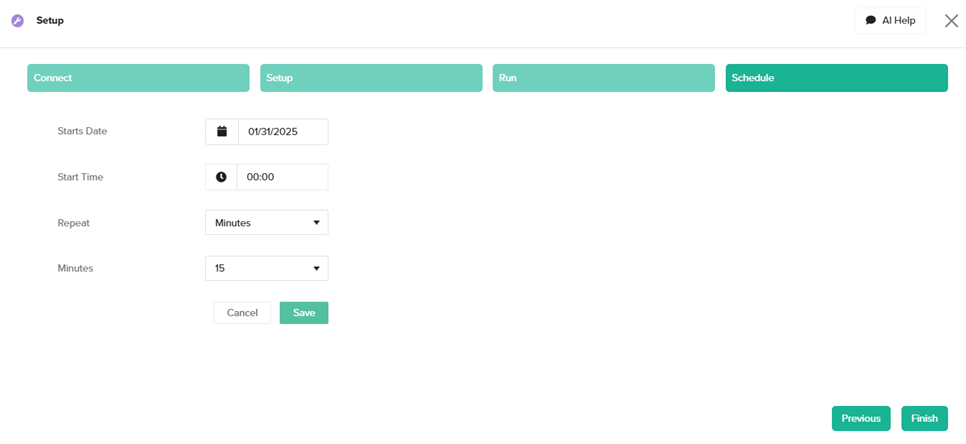
10. To automate the sync, select the **Start Date** and **Start Time**. Click **Repeat** dropdown menu and choose the frequency (e.g., Minutes, Hours, Days). If Minutes is selected, specify the interval in the Minutes dropdown.

<figure><img src="/files/0Vo4eYkFCRTGxbYN7EUI" alt=""><figcaption></figcaption></figure>

11. Click **Save** to confirm the schedule. Click Cancel if you do not want to save the changes.
12. Use the Previous button to go back and modify settings if needed. Click **Finish** to complete the scheduling process.